
Your LLC up and running in any state
From $499 and in under 25 days
We make it easy. Really, easy.
Unlock new opportunities for your business in the USA today!
To cut to the chase, here is the quick and simple answer: Yes, you can open an LLC in the United States from Spain even if you are not a U.S. citizen or resident. In many cases, the formation process can be handled remotely, with no need to travel to the U.S.
This legal structure offers you tax advantages, such as not paying federal taxes in the United States if you are not ETBUS, and avoiding double taxation by paying taxes only in Spain. In addition, a Limited Liability Company (LLC) protects your personal assets, makes it easier to run the business from abroad and gives you access to the international market with low operating costs and flexibility.
That said, creating an LLC from Spain is not just about registering a company. You will also need to choose the right state, have a Registered Agent, apply for the EIN, weigh your options for opening a business bank account and understand the tax obligations that may apply both in the United States and in Spain.
In this article, we will explain in detail how to set up an LLC in the United States as a Spanish resident, comply with the regulations and understand the tax implications both in the USA and in Spain. With this guide, you will be able to make informed decisions and successfully expand your business internationally.
What is an LLC?
An LLC (Limited Liability Company) is a business structure in the United States that offers limited liability, which means the owners' personal assets are protected in the event of debts or lawsuits against the company. It also offers pass-through taxation: the company's profits flow directly to the members, who report them on their personal tax returns. If your LLC does not generate income in the United States, you will not have to pay taxes there.
Forming an LLC allows you to operate remotely, without living in the USA, which makes it easier to open bank accounts and access financial benefits. States such as Delaware and Nevada offer favorable environments for reducing tax burdens and increasing privacy.

Requirements to open an LLC from Spain
To open an LLC from Spain, the requirements are simple: you need a valid identity document (DNI or passport) and to be over 18 years old. You do not need to travel to the United States to form the company, which makes the process easier for Spanish entrepreneurs interested in expanding into the U.S. market.
However, the company will need to meet certain requirements in the state where it is formed, such as having a Registered Agent with a physical address in that state.
In that regard, it is worth distinguishing between two processes that are often confused:
Creating the LLC: legally registering the company with the relevant state.
Getting it up and running: obtaining the EIN, organizing the business documentation, opening a bank account and meeting the applicable tax and administrative obligations.
So, opening an LLC from Spain can be done remotely, but getting it properly ready to operate requires a few additional steps.
However, it is recommended to hire specialized advisory services to handle key procedures such as filing the Articles of Organization and obtaining the EIN. This ensures you comply with tax and legal regulations, avoiding mistakes and delays that could lead to additional costs.
Steps to open your LLC in the USA as a Spanish resident
You now know what an LLC is and you meet the requirements to open one in the U.S. from Spain. Now let's look at the steps needed to set up and run your LLC successfully.
1. Choose your LLC's state
Carefully choose the state where you want to register your LLC. Each state has different costs and regulations, which will affect your annual expenses and the privacy of your information. The three main criteria to consider are:
Registration fee: The formation cost is a one-time fee you pay to the state when you register your LLC.
Annual report in which you must provide updated information about your company. Some states may charge annual fees.
Privacy: Some states allow the names of members or owners to be kept out of certain public state records, which provides a higher level of business privacy.
This privacy does not mean anonymity before the IRS, financial institutions or other authorities that may require information about the company and its owners. Nor does it eliminate the tax or reporting obligations that apply to the owner based on their situation and country of tax residence.
So when we talk about an ''anonymous'' LLC, we are referring only to privacy from the public state registry, not to the possibility of hiding the ownership of the company or its income from the authorities.
Here we compare the main U.S. states for opening your LLC so you can make the best decision.
Florida | Delaware | Texas | New Mexico | Wyoming | |
|---|---|---|---|---|---|
Formation cost | $125 | $90 | $300 | $50 | $100 |
Annual report cost | $138.75 | $300 | 0 | 0 | $60 |
Processing time | 5 business days | 9 to 12 weeks | 7 business days | 3 business days | Same day |
Some states, such as New Mexico, offer competitive fees, which can be ideal for reducing startup costs. New Mexico also has no annual report. On the other hand, if you value privacy and favorable case law, Delaware is a good option.
The decision about which state to open your LLC in affects both costs and day-to-day operations. Assess your priorities, such as fees, privacy and ease of management, to make the best strategic decision for your company.
2. Choose your LLC's name
When choosing your LLC's name, you must comply with state laws and consider your brand strategy. Most states require the name to be unique within their jurisdiction, with no overlap with existing companies. Use the name availability tools offered by the chosen state to confirm it is available.
It is mandatory to include the abbreviation "LLC" in the name, which indicates the legal structure and protects the owners from personal liability. In addition, some states prohibit the use of specific terms such as "bank" or "university" unless the company operates in those sectors.
Check state laws to avoid problems and rejected filings. Make sure the name complies with all regulations so you can start your LLC on a solid foundation.
3. Choose your registered agent
When forming an LLC in the United States without living in the country, you must appoint a registered agent in the state where you register the company. This agent, which can be an individual or an entity with a physical address in the USA, is responsible for receiving legal and official documents on behalf of your LLC. Its role is crucial to ensure that all important correspondence, such as summonses or tax notices, reaches you on time.
The registered agent must be available during business hours and have an address in the state of registration to make sure you do not miss essential legal notices, thus avoiding possible fines or problems with your LLC.
Either an individual over 18 in the U.S. or a company specializing in registered agent services can fill this role. These services are usually renewed annually, so it is key to understand the registered agent's responsibilities and keep your information up to date to meet all your legal obligations.

4. Complete the "Articles of Organization" form
To formally register your LLC, you must file the "Articles of Organization" with the relevant state agency. This document formalizes the creation of the LLC with the state and establishes the key legal aspects of your business, including:
Your LLC's name
The principal address
The registered agent
The names of the members or managers.
The filing fee ranges from $50 to $500, depending on the state.
Understanding the Articles of Organization filing process ensures your application meets all state requirements and helps you avoid delays or rejections that could hold up the start of your business operations.
Once approved, you will receive a Certificate of Formation. This certificate is a document confirming that your LLC is officially registered and operational. With this certificate, you will be able to open a bank account in the USA, obtain a tax identification number (EIN) and complete other important procedures to run your company.
5. Create your operating agreement
The Operating Agreement is a document that defines how your LLC will be managed and the rights and responsibilities of each member. Although it is not mandatory, it is highly recommended that you have this agreement in writing to legally protect your company.
This agreement covers essential matters such as the allocation of profits and losses, capital contributions and procedures for resolving disputes or handling a partner's exit. It also offers flexibility by allowing management to be shared among the members or delegated to an outside manager.
Having a well-tailored Operating Agreement that addresses your business's specific needs is essential. It ensures clarity in day-to-day management, minimizes future conflicts and improves your LLC's image with banks or investors.
6. Get an EIN
Once your LLC is registered in the United States, you will need to apply for an Employer Identification Number (EIN) from the IRS. This number is essential for handling tax and administrative obligations, such as paying taxes and running payroll.
The EIN is indispensable if you plan to hire employees, open a business bank account or if your LLC has more than one member. It also lets you keep personal and business finances separate, protecting your information.
To obtain it, complete Form SS-4 on the IRS website. The process is free and can be done online, and it is essential for meeting your federal tax obligations.
7. Keep your LLC active
Once your LLC is registered and operational, you must keep it active and in compliance with state laws to avoid legal and financial problems. Make sure you meet all regulatory obligations and deadlines of the state where your LLC is registered.
Most U.S. states require you to file an annual report to update information about your LLC, such as the address, member details, etc. Failing to meet this requirement can result in penalties, fines or even the dissolution of the LLC. Some states charge an annual fee for this filing.
In addition, make sure you renew the necessary licenses and permits so your LLC can keep operating legally. A calendar of due dates will help you meet all your obligations on time.
Delegate your LLC formation and skip all these complex processes.
How does an LLC pay taxes in Spain?
Opening an LLC in the United States does not mean you stop having tax obligations in Spain.
If you remain a tax resident in Spain, your tax situation will need to be analyzed taking into account both the U.S. tax rules that apply to the LLC and the Spanish rules that apply to your case.
If you register and run a company in Spain, you must meet certain tax requirements. These include:
Companies: Paying Corporate Income Tax (Impuesto de Sociedades), which applies an annual 25% rate on profits. For new companies, this rate can be reduced to 15% during the first two years.
Self-employed (autónomos): Paying the monthly self-employed contribution, which ranges from 230 to 500 euros.
However, with an LLC, your company will not be based in Spain, so you will not have to pay these taxes.
Important: With an LLC, you will not contribute to the Spanish social security system. Therefore, you will not contribute toward your retirement, you lose the right to unemployment benefits, etc... So take this into account when organizing your personal finances.
However, since the LLC is a pass-through entity, you will have to pay Personal Income Tax (IRPF) on all the profits you earn. This tax must be reported at the end of the tax year. If you do not pay IRPF, you could face significant fines, late-payment interest, and even criminal proceedings in serious cases.
Also, the bookkeeping for an LLC is far simpler than for a company formed in Spain. Accountant fees will be much lower.

What should I do after forming my LLC?
After registering your LLC, it is crucial to establish a solid financial and tax foundation. Here are three key points to consider:
Open a bank account dedicated to your LLC
After registering your LLC, it is essential to open a business bank account to keep your personal finances separate from your business finances, which protects the company's limited liability.
This dedicated account makes financial management easier and simplifies bookkeeping, making the tax filing process smoother.
Some recommended options for non-U.S. residents include Mercury, Relay, Revolut, AirWallex, Wise, Bank of America and Chase. When choosing a bank, review the associated fees, such as maintenance costs, international transfers and the quality of customer service.
Plan your LLC's taxes
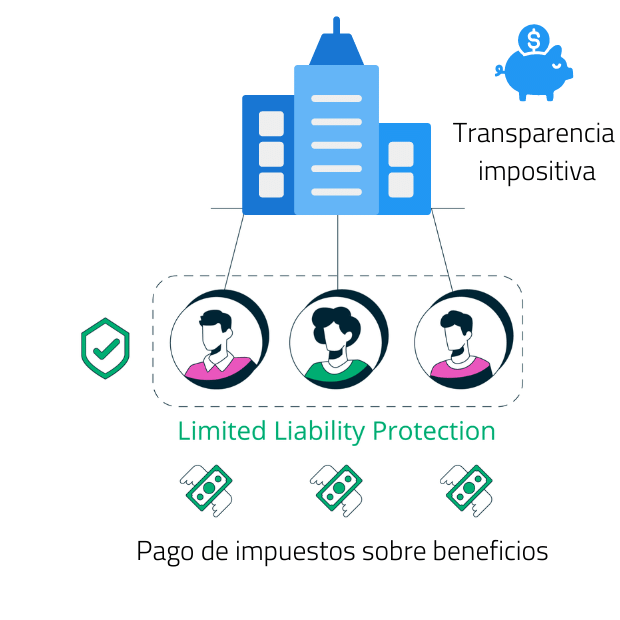
As a pass-through tax entity, an LLC does not pay corporate taxes directly. Instead, income flows through to the members, who must report it and pay personal taxes.
Your LLC's taxation may be affected if it is classified as Engaged in Trade or Business in the US (ETBUS), which applies if you carry out activities in the USA, such as in-person sales, trading, dropshipping or using platforms like FBA.
Plan your taxes according to your LLC's activities to ensure proper compliance.
Meet your obligations
Your LLC must renew its Registered Agent every year, which receives legal and tax notices in the United States. This renewal is mandatory in all states and usually has a cost.
Also, many states require an Annual Report, which details the company's structure and activity, with fees that vary by state.
Even if your LLC does not generate income or pay taxes in the USA, it must report its annual tax activity to the IRS. This may include forms such as Form 5472 for a single foreign owner or Form 1065 for multi-member LLCs.

Do I have to report my LLC in Spain?
Having a U.S. LLC does not eliminate the tax or reporting obligations that may apply to you as a Spanish tax resident.
How you must report your ownership interest, income, accounts or other assets related to the LLC will depend on factors such as your tax situation, the nature of the structure and the type of assets or rights you hold abroad.
For example, certain ownership interests or assets located outside Spain may be subject to reporting obligations, such as those related to Modelo 720, when the requirements set by Spanish regulations are met.
That is why you should not assume that everyone with an LLC has to file Modelo 720, nor that no one does. The obligation depends on the specific circumstances.
If you are a tax resident in Spain and are thinking about opening an LLC in the United States, it is advisable to review the structure with a professional who knows international taxation before you start operating.
LLC in the USA or self-employed in Spain: which is better?
Opening an LLC in the United States is not automatically better than working as an autónomo (self-employed) in Spain.
The choice depends on the business model, your clients, where the activity takes place, the structure you need and your tax obligations.
Aspect | Self-employed in Spain | LLC in the U.S. |
|---|---|---|
Place of formation | Spain | United States |
Tax residence | Spain | Does not change by creating the LLC |
International clients | Yes | Yes |
U.S. business account | Not necessarily | Can be an option |
Maintenance costs | Depends on the situation | Depend on the state and the structure |
Tax obligations | Spain | U.S. and/or Spain depending on the case |
Administrative complexity | Generally lower | Higher because it is an international structure |
Opening an LLC in the United States from Spain is possible and can be an attractive alternative for certain entrepreneurs, freelancers and digital businesses that work with international clients.
But forming the company is only one part of the process. You will also need to choose the right state, obtain the EIN, set up the bank account and meet the administrative and tax obligations that apply both in the U.S. and in Spain.
If you want to create your LLC without having to handle all these steps on your own, Start Companies can help you form your company in the United States and set up the structure you need to start operating.
How long does it take to open an LLC from Spain?
The timeline depends on the state and the procedures required. You also need to distinguish the time it takes to form the LLC from the time needed to obtain the EIN and complete other later steps.
Can I open a U.S. bank account for my LLC from Spain?
It is possible in certain cases, but approval and requirements depend on the bank or financial provider. Forming an LLC does not by itself guarantee that an account will be opened.
Do I have to travel to the United States to open an LLC?
Not necessarily. The formation can be handled remotely, although other procedures, such as opening a bank account, may have additional requirements.

Written by
Ignacio Navarro
Ignacio Navarro is a Certified Public Accountant, founder of Start Companies and a specialist in U.S. companies for entrepreneurs, freelancers and digital businesses in Latin America. With training in international taxation and studies at UCEMA, he advises non-resident clients on forming and maintaining LLCs, opening bank accounts, invoicing, accounting and taxes. His experience combines tax strategy, compliance and practical vision for operating in the U.S. in a simple, organized and professional way.


