

U.S. LLCs can be one of the best legal entities for entrepreneurs who are not residents of the United States. Indeed, American LLCs give you access to all the advantages of a first-world jurisdiction, such as banking, payment processing and a good reputation, while keeping a relatively low tax rate and easily manageable compliance requirements.
If you are looking for information on how to open an LLC in the United States, our complete guide will give you everything you need to know to decide whether an LLC is a good option for you, how you can open one quickly and in compliance with the rules, and everything else you should pay attention to when managing it.
What is an LLC?
A limited liability company, or LLC, is a U.S. business structure created under each state's laws, in which the company is legally separate from its owner or owners.
An LLC therefore protects its individual members from legal liability and offers tax transparency, meaning that taxes are not paid by the company but by its members as individuals. If none of the LLC's members are U.S. nationals, taxes will not have to be paid in the USA.
Who can open an LLC in the United States?
LLCs in the United States can be opened by anyone in the world, regardless of nationality, who is over 18 years old and has a valid passport.
How to open an LLC in the United States in 7 steps
Now that you know what an LLC is and that you meet the requirements to open your business in the United States, let's look at the steps you need to follow to have an operational LLC.

1. Choose your LLC's state
Choose carefully the state where you want to register your LLC, since each one has different features and obligations for your business.
When deciding which state to form your LLC in, three criteria are the most relevant:
The amount of the one-time registration fee required to form the LLC.
The cost of the annual report.
Only some states guarantee anonymity, meaning the names of LLC owners are not made public (only the tax authorities know them)
Here we compare the main U.S. states for opening your LLC.
FloridaDelawareTexasNew MexicoWyomingFormation cost$125$90$300$50$100Annual report cost$138,75$30000$60Processing time5 business days9 to 12 weeks7 business days3 business daysSame dayAnonymityNoYesNoYesYes
In general, if you prefer to save on costs, New Mexico is a great option. If you are looking for greater anonymity, consider Delaware. Wyoming has a nominee service, which can be useful for anonymity.
2. Choose your LLC's name
When choosing their LLC's name, most partners only think about marketing and brand image. However, it is important to know that when choosing the right name to register an LLC, you must also meet the requirements of state law.
In general, state laws do not allow you to choose a name that is already being used by another company in the same state. Also, the vast majority of states require you to include the letters LLC in the name of the business.
If you already have a business idea and want to check availability in the state you have chosen, you can do so with this LLC name checker.
3. Choose a registered agent
No matter which state you decide to register your LLC in, every LLC must designate a registered agent. A registered agent is someone who receives official or legal documents on behalf of the LLC. Once received, the registered agent forwards these documents to the LLC.
Anyone over 18 can be the registered agent of a U.S. LLC, and you can appoint yourself or an employee. However, the agent must be available at an address within the state during normal business hours. Also, all the companies that handle LLC registration offer registered agent services, which are renewed annually.
4. Complete the "Articles of Organization" form
To form your LLC as a legal entity, you will need to file this document with the state agency in charge of business filings in your state. In most states, this document is called "Articles of Organization", but some use a different name, such as "Certificate of Formation".
This document will contain all the key business information, such as the business name, address, purpose, members, etc... Filing this document usually has a cost, which varies by state (see the "formation cost" row in the table in step 1.
Once this form is approved by the state agency, your LLC, the state will issue a certificate stating that your LLC is formally registered.
5. Create your operating agreement
An operating agreement is basically an agreement among the members on how the LLC will function and operate. This document lists the details of the financial, legal and management rights of all LLC members: dividend distribution, withdrawal clauses, non-compete clauses, capital contributions...
Many states do not require it, but it is highly recommended to have one anyway, to make sure all members agree on their rights and responsibilities.
Download the Operating Agreement template
6. Get an EIN
Once your LLC is registered, it will need to obtain an "Employer Identification Number", or EIN, from the IRS. An EIN is basically the number the IRS uses to track the LLC's obligations, tax payments, payroll, etc...
Although having an EIN is not always mandatory (for example, with single-member LLCs), you will need one if you have or plan to have employees, if your LLC has more than 1 member, or if you want to open a bank account for your LLC, among other things.
7. Keep your LLC active
Forming an LLC is only the beginning of the adventure. Once your LLC is registered and operating, make sure you don't miss any state deadlines. You will most likely have to file an annual report that updates your LLC's information, and in some states it has a cost you need to factor in.
Delegate the formation of your LLC and avoid all these complex processes
What should I do after forming my LLC?
As we said earlier, registering your LLC is only the beginning. Once you have completed all the previous steps, there are a few points we recommend you take into account.
Open a bank account dedicated to your LLC
A business bank account helps your LLC establish its financial presence and separate personal and business finances, which helps maintain the legal distinction between the LLC and its owners. This is key to preserving your limited liability protections.
It also brings other benefits, such as simple bookkeeping for the business, which will make tax time and tax reporting much less intimidating.
The recommended banks for your business account as a non-U.S. person are Mercury, Relay, Revolut, AirWallex, Wise, Bank of America, Chase.

Plan your LLC's taxes
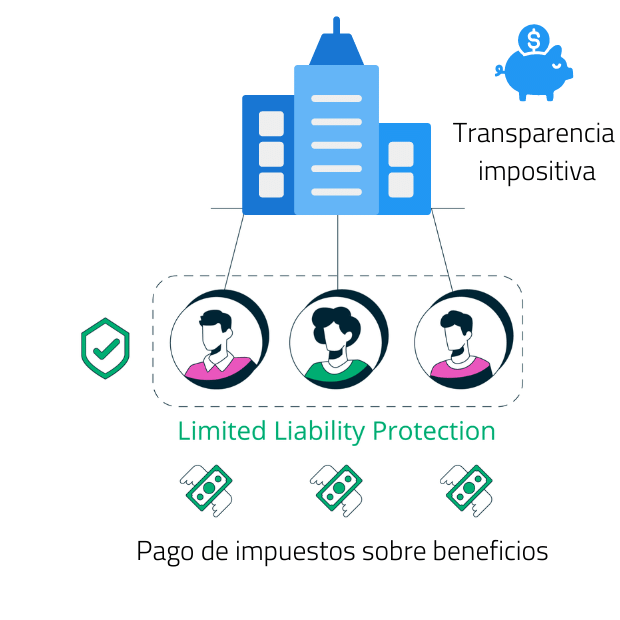
LLCs are taxed on a pass-through basis, meaning that the members are responsible for personally paying taxes on the LLC's income.
As a non-resident, the taxes your LLC pays may be affected by its classification as ETBUS (Engaged In Trade in The US).
Plan your LLC's taxes in detail, since they can vary depending on activities such as trading, dropshipping, FBA, sales of physical products in the USA, etc...
Meet your obligations
Your LLC will have obligations to meet every year, such as renewing the Registered Agent. Depending on the state, your LLC may have to file an Annual Report, which, as we saw earlier, has a cost.
Even if your business does not have to pay taxes in the United States, your LLC will still have to report its activity.

What are the benefits of opening an LLC in the United States?
The main advantages of opening an LLC in the United States as a non-resident include: An LLC is a “pass-through entity,”, which means taxes can pass through to the owners.An LLC lets you legally separate your business from yourself.An LLC gives your business a professional imageOpening an LLC makes it easier to access the U.S. market.Opening an LLC lets you have a business bank account and get paid in dollars.Meeting an LLC's obligations is easy.
How much does it cost to open an LLC in the United States?
The cost of opening an LLC in the United States depends on the state where you register it. It can range from as little as $50 to more than $500, just for registering the company. In addition, when analyzing the cost of opening an LLC, it is important to consider the annual cost of maintaining it, since you will need to pay a registered agent and the annual report (depending on the state).
How long does it take to open an LLC in the United States?
If you file the LLC formation application online yourself, your LLC may be formed within two to four business days. Otherwise, LLC documents filed by mail usually take anywhere from two to several weeks to process. The time it takes to register the LLC will vary by state, as well as with how quickly the IRS processes things.
How many members can an LLC have?
There is no minimum or maximum number of owners for an LLC. LLCs can be “Single Member”, meaning you are the sole owner, or have several dozen members if you wish.
How are Non-Resident LLCs taxed?
U.S. LLCs classified as “Foreign Owned” do not pay tax on business income; instead, they are tax-transparent, meaning taxes pass through to the LLC's members according to their percentage of ownership.
What are the different types of LLC?
There are 6 main types of LLC: Single-member LLC: This LLC is owned and managed by a single person. Multi-member LLC: This is the standard type of LLC with more than one partner. Each partner then holds a percentage of the company's ownership.L3C: An L3C (low-profit limited liability company) is a for-profit type of LLC whose main purpose is charitable or educational.Series LLC: A Series LLC is a unique form of limited liability company (“LLC”) whose articles specifically allow the unlimited segregation of members' interests, assets and operations into independent series. Each series functions as an independent entity with a unique name, its own bank account and separate accounting books and records.PLLC: A professional limited liability company (“PLLC”) is a business entity designed for licensed professionals such as lawyers, doctors, architects, engineers, accountants and chiropractors.Restricted LLC: This type of U.S. LLC is not taxed during its first 10 years after formation. However, it cannot make distributions to members. This must be stated in the Article of Organization.
What types of businesses usually benefit from opening a U.S. LLC?
The non-resident businesses that usually benefit most from opening an LLC in the United States are dropshipping companies, trading businesses, freelancers who work internationally, e-commerce businesses and other types of online businesses. LLCs are usually a great option for any business that has no borders or local requirements.
What are the differences between an LLC and a Sole Proprietorship?
A Sole Proprietorship is an unincorporated business owned solely by the person who runs it. As the sole proprietor, there is no separation between your personal assets and expenses and those of the business. You are personally liable for all of your business's debts and obligations. People who do a lot of contract work, such as freelancers, consultants and personal trainers, often choose to file their taxes as sole proprietors. It is the simplest way to do it if you are just starting out or are not yet earning enough to justify the costs of an LLC.
Is an LLC the same as a Corporation?
No. Taxation is the main difference between an LLC and a Corp. An LLC's taxes are reported by its owners. Corps file their own returns under their own names. An LLC can, however, ask the IRS to classify the LLC as an S corporation. With that tax status, you can often split the LLC's net income into salary and dividends. When you do that, you and the other owners pay less in self-employment taxes. Making that election, however, only changes how your company is taxed; it does not turn your LLC into a corporation.

Written by
Ignacio Navarro
Ignacio Navarro is a Certified Public Accountant, founder of Start Companies and a specialist in U.S. companies for entrepreneurs, freelancers and digital businesses in Latin America. With training in international taxation and studies at UCEMA, he advises non-resident clients on forming and maintaining LLCs, opening bank accounts, invoicing, accounting and taxes. His experience combines tax strategy, compliance and practical vision for operating in the U.S. in a simple, organized and professional way.


