
Did you know there are 8 types of LLC? As if choosing a business structure weren't complicated enough!
The reality is that as LLCs grew in popularity in the United States, the states understood the need to create different LLC structures to meet the different needs of businesses.
Today, each state governs LLCs differently. In fact, some states recognize all 8 types, while others recognize only 5 or 6, and each one has its own rules and regulations for handling them.
But here's the thing: if you've already made the decision to register an LLC, you've already done the hard part. You already know all its advantages, and you already know which state to form it in. Now all that's left is to choose the type of LLC that fits your business's needs. Let's get started!
1. Single-member LLC
Entrepreneurs without partners can choose the legal structure of a single-member LLC. As the name suggests, single-member LLCs have only one member, unlike the multi-member LLCs we'll look at next.
The advantages of a single-member LLC include the ability to approve and add new members, a simpler tax system (they are taxed as "Sole Proprietorships" rather than "Partnerships") and the ability to transfer ownership to others. However, there are disadvantages, such as more paperwork and obligations compared with a "Sole Proprietorship", which is usually the other option chosen by this type of entrepreneur.
2. Multi-member LLC
A multi-member LLC has several partners, who will agree on how the business will operate by drafting an operating agreement. Multi-member LLCs can be managed by the members themselves or by managers. If this option is chosen, it must also be specified in the operating agreement.
Among the main advantages of multi-member LLCs are the possibility of having unlimited members (U.S. companies or individuals) and the fact that they are taxed as "Partnerships" by default, although they can also elect to be taxed as S Corps or C corps.
Multi-member LLCs can be formed in any of the 50 U.S. states.
3. Domestic LLC and Foreign LLC
A domestic LLC is an LLC that has been formed in and operates within the same state. A Foreign LLC is an LLC that has been registered in a state different from the one where the company is located or where it carries out its business operations.
Foreign LLCs are chosen because some states offer more business-friendly laws, cheaper registrations or certain more attractive tax advantages. When operating in several states, you must comply with local rules and regulations, which can be expensive and requires professional advice. In addition, you will probably need a business address in the foreign state and will have to file state tax returns in both states.
All U.S. states allow domestic and foreign LLCs.
4. Series LLC
A Series LLC is a group of LLCs in which a parent LLC controls other, smaller LLCs called series or cells.
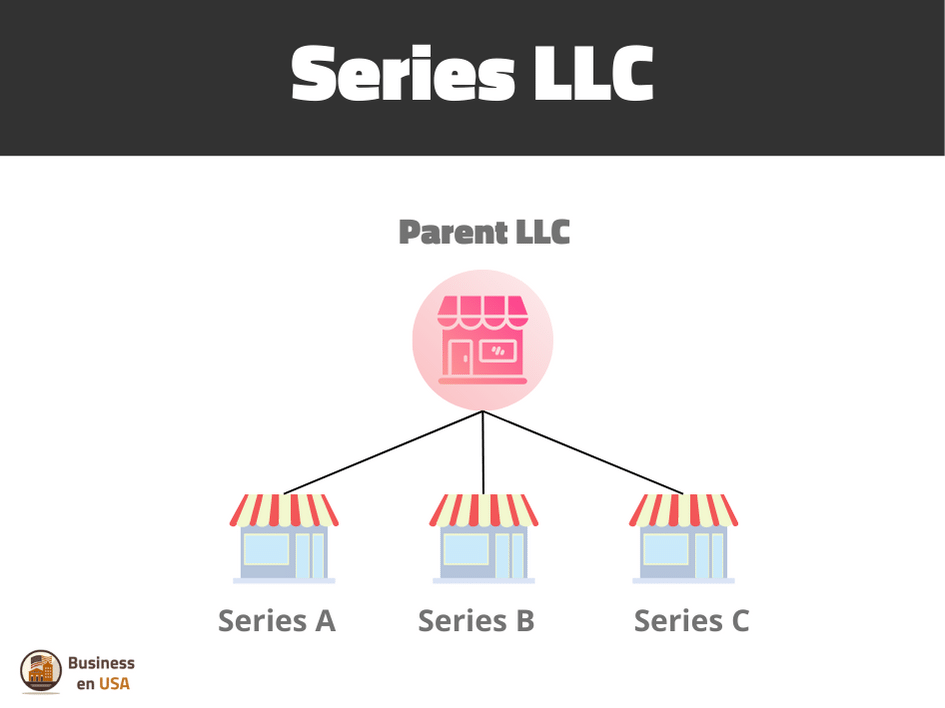
Each series has its own identity and liabilities, which makes it popular with business owners who have multiple interests. There are advantages, such as cost and time savings, and disadvantages, such as high administrative costs.
The tax and legal treatment of series LLCs varies by state. There are 20 U.S. states that allow series LLCs to be formed.
5. L3C Company (Low-profit LLC)
An "L3C Company" is a type of LLC created specifically to carry out low-profit charitable or philanthropic activities. Its main goal is social good, not making a profit.
This type of LLC offers the same tax benefits as a multi-member LLC, but it also brings the prestige and image of a nonprofit institution.
As disadvantages, we could mention that investors may lose their money without obtaining tax benefits and have limited knowledge of how the funds invested in this type of LLC are used. This makes some donors or investors hesitant to invest in or donate to an L3C.
L3Cs are allowed in 15 U.S. states.
6. Anonymous LLC
An "Anonymous LLC" is a single-member or multi-member LLC formed without publicly disclosing the identity of its owners, managers or members. Anonymous LLCs are usually valued by entrepreneurs who want to protect their privacy and not be personally linked to their business.
However, the information about the members of anonymous LLCs can be known by the IRS or by banks.
The states that allow anonymous LLCs are:
- Delaware
- New Mexico
- Wyoming
- Nevada
7. Restricted LLC
A Restricted LLC is a type of LLC that has only been available in the state of Nevada since 2009. This type of LLC is mainly used to transfer assets, avoiding taxation and liquidation when passing them between family members.
However, profits from this type of LLC cannot be distributed to its owners for at least ten years, unless otherwise specified in the articles of organization. During these ten years, the profits are not subject to taxes in the United States.
When you create a Restricted LLC, you can choose the best distribution restriction and configure it according to your needs. When registering an LLC in Nevada, you will have to check the box for "Restricted LLC" to create it.
8. PLLC and LLC
In certain states, licensed professionals, such as lawyers, accountants and medical service providers, may be required to form a PLLC to carry out their operations and reduce their personal liability.
PLLCs offer flexibility in their management structure and pass tax liability through to the owners (Pass-through taxation), and they have fewer requirements and obligations than a corporation.
However, it's important to note that it is not possible to register more than one PLLC per professional. Also, banks may require personal guarantees for loans. The IRS does not recognize PLLCs, and only 29 states allow them to be formed.
Conclusion
Now that you know the 8 different types of LLC, you can choose the right one for your business.
But remember, it's not only the government and state requirements that matter. Your own requirements, driven by your dreams and the vision you have for your business in the future, are also important to consider when choosing among the 8 types of LLC.
Finally, we recommend that you consult a professional who can advise you on which type of LLC best fits your needs.

Written by
Ignacio Navarro
Ignacio Navarro is a Certified Public Accountant, founder of Start Companies and a specialist in U.S. companies for entrepreneurs, freelancers and digital businesses in Latin America. With training in international taxation and studies at UCEMA, he advises non-resident clients on forming and maintaining LLCs, opening bank accounts, invoicing, accounting and taxes. His experience combines tax strategy, compliance and practical vision for operating in the U.S. in a simple, organized and professional way.